Islamic Wall Art Ideas to Create a Peaceful and Meaningful Home
A peaceful home is shaped by more than its furniture, colours, and lighting. The details displayed on its walls can also influence how a space feels and what it represents to the people living in it. For Muslim households, Islamic wall art offers a meaningful way to bring faith, personal values, and visual beauty together. From elegant Arabic calligraphy to carefully selected Quranic verses, the right artwork can create a welcoming atmosphere while serving as a daily reminder of faith.
The beauty of Islamic decor lies in its versatility. It can complement a contemporary living room, add character to a traditional drawing room, or create a dedicated corner for prayer and reflection. Designs featuring Bismillah, Ayat al-Kursi, the 99 Names of Allah, and other meaningful calligraphy allow homeowners to choose pieces that reflect their preferences and spiritual connection.
However, creating a balanced interior requires more than selecting a beautiful design. The artwork should suit the room’s size, colour palette, lighting, and purpose. Its placement also matters, particularly when displaying sacred words that deserve respectful treatment.
With thoughtfully chosen designs, homeowners can create interiors that feel personal, harmonious, and meaningful. Brands such as Razzi Designs offer a range of calligraphy and decorative pieces that can help inspire a faith-centred home.
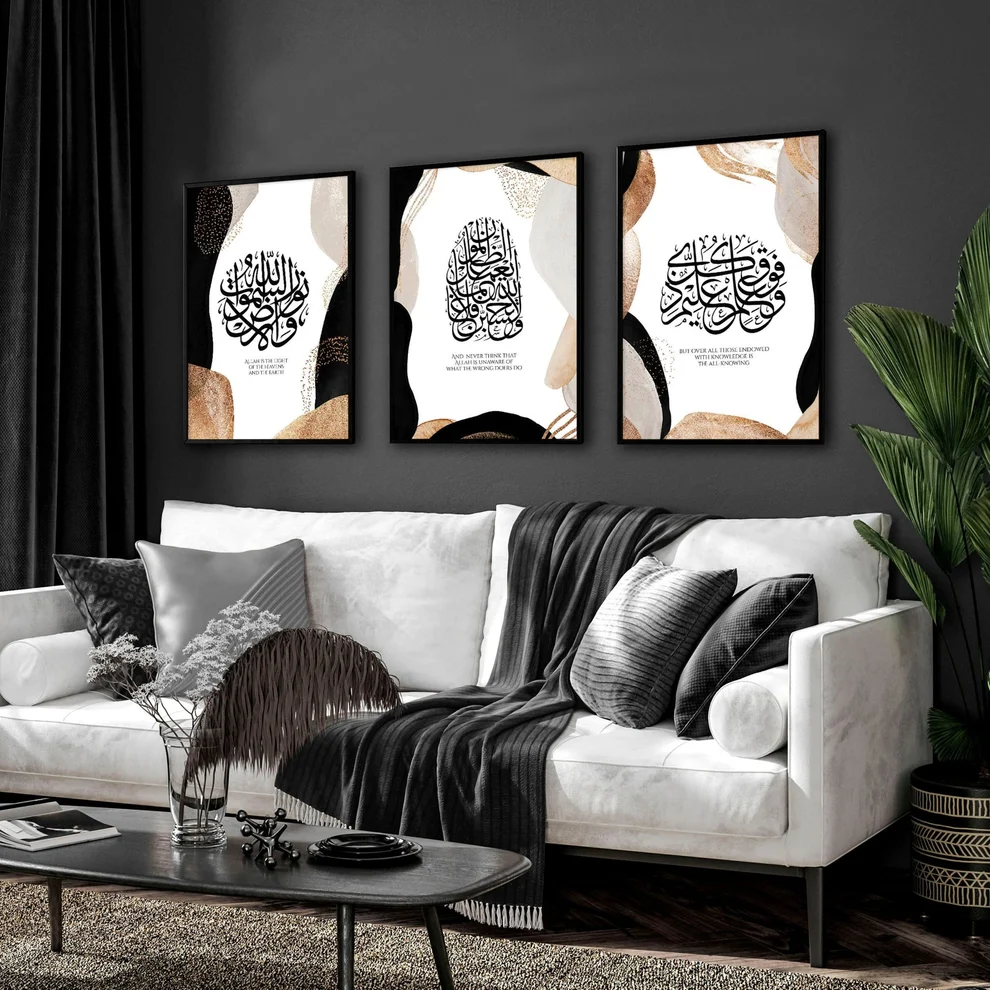
1. Create a Welcoming Living Room With Arabic Calligraphy
The living room often serves as the main gathering place for family members and guests. Adding Arabic calligraphy can give this shared space a distinctive focal point without making the overall décor feel crowded.
A large calligraphy piece above the sofa or on a central feature wall can work particularly well. Gold, silver, black, and white finishes can complement different interior styles, depending on the surrounding furniture and wall colour.
For a balanced look, homeowners should consider the following ideas.
- Choose one prominent artwork instead of filling every available wall.
- Match the finish with existing furniture accents, lighting, or decorative details.
- Leave enough space around the artwork so its design remains visible.
- Select a size that suits the wall rather than overwhelming the room.
A well-positioned piece of Islamic wall art can become a natural part of the living room’s design while reflecting the household’s values.
2. Add Quranic Verses to a Dedicated Prayer Corner
A dedicated prayer area can provide a quiet place for salah, Quran recitation, and personal reflection. Even a small corner of a bedroom or living room can serve this purpose when arranged thoughtfully.
Artwork featuring Ayat al-Kursi or selected Quranic verses may complement the space, provided the text is displayed accurately and treated with respect. A simple prayer mat, a clean surface for religious books, and soft lighting can help maintain a calm atmosphere without unnecessary decoration.
Homeowners can make the corner more practical by keeping it free from clutter and placing furniture where it does not obstruct prayer. They should also consider the position of sacred text in relation to floor-level objects and everyday activities.
The aim is to create a space that supports worship rather than turning the prayer area into a purely decorative feature.
3. Choose Minimalist Designs for Modern Interiors
Minimalist interiors rely on clean lines, restrained colours, and carefully selected accessories. Islamic calligraphy fits naturally into this style because a single well-designed piece can provide visual interest without requiring numerous decorative objects.
Black calligraphy on a white wall creates a crisp contrast, while gold lettering can introduce warmth into a neutral interior. Silver finishes may suit rooms with cool tones, glass furniture, or contemporary metallic accents.
To maintain a minimalist appearance, homeowners should avoid mixing too many frame styles or finishes within the same space. One large piece or a coordinated set can create a more consistent look than several unrelated designs.
Razzi Designs features different calligraphy and acrylic designs that homeowners can explore when looking for artwork suited to modern interiors. Its Islamic wall art collection provides a starting point for comparing designs and choosing a style that complements the home.
4. Use Bismillah Artwork Near the Entrance
The entrance establishes the first impression of a home. A carefully selected Bismillah design can give the entryway a meaningful focal point while welcoming family members and visitors.
Acrylic calligraphy or a framed design can work well above a console table or on a clear section of wall near the entrance. The artwork should remain easy to see without competing with mirrors, storage units, or other decorative elements.
When choosing a design, homeowners should consider the available wall space and the amount of natural or artificial light. A darker finish may stand out against a pale wall, while a gold design can complement warm lighting and wooden furniture.
Sacred text should also be positioned where it can be maintained and respected. An entrance is a busy area, so the placement should protect the artwork from accidental damage and avoid locations where people might treat it carelessly.
5. Make a Statement With Coordinated Calligraphy Sets
Some walls are large enough to accommodate a collection of related artworks rather than a single frame. Coordinated sets can create a more complete display, particularly in spacious living rooms, drawing rooms, or formal sitting areas.
The key is to maintain consistency. A set with matching finishes, complementary proportions, and a clear visual arrangement can look more polished than a collection of unrelated pieces.
Consider these styling tips.
- Measure the wall before deciding on the number and size of pieces.
- Arrange the designs evenly, leaving consistent gaps between them.
- Keep the display aligned with the furniture beneath it.
- Choose related designs that share a visual theme or meaningful connection.
For example, a coordinated display featuring the names of Allah and the Prophet Muhammad (peace be upon him) may suit a family living area. Other households may prefer Quranic calligraphy or designs inspired by Islamic architecture.
The most effective arrangement depends on the room’s proportions and the meaning behind the selected pieces. Homeowners should prioritise readability, respectful presentation, and a balanced layout.
6. Select Colours That Complement the Existing Décor
Colour plays an important role in how Islamic artwork fits into a room. A carefully chosen finish can connect the artwork with the furniture and accessories, helping the entire interior feel cohesive.
Gold often complements warm lighting, cream walls, wooden furniture, and traditional interiors. Black creates a defined contrast in modern spaces, while silver can work well with cooler palettes and contemporary finishes.
Homeowners do not need to match every colour exactly. Instead, they can repeat one or two tones throughout the room to create a visual connection between the artwork and its surroundings.
Wall colour is equally important. Light artwork may disappear against a pale background, while dark calligraphy can become difficult to distinguish on a similarly dark wall. Testing the contrast before installation helps ensure the design remains visible.
For more inspiration, Razzi Designs offers Islamic calligraphy and decorative designs that can help homeowners compare different finishes and visual styles.
7. Choose Artwork That Reflects Personal Meaning
Interior design becomes more meaningful when the selected pieces reflect the people who live in the home. Rather than choosing artwork solely because it matches a particular trend, homeowners can consider which words, verses, or calligraphic styles hold personal significance.
Some may prefer Ayat al-Kursi, while others may be drawn to Bismillah, the 99 Names of Allah, or designs inspired by Masjid Nabawi. Each option can contribute a different visual character to the room.
Before purchasing, it is worth checking the accuracy of the Arabic text, the quality of the finish, the dimensions, and the suitability of the mounting method. Sacred wording should be verified carefully, particularly when selecting intricate calligraphy.
Homeowners should also consider how easy the artwork will be to clean and maintain. A durable finish and secure installation can help preserve its appearance over time.
Ultimately, meaningful décor should reflect both the household’s aesthetic preferences and its respect for Islamic teachings.
Final Thoughts
Creating a peaceful and meaningful home does not require filling every wall with decoration. A few carefully selected pieces can bring together faith, personal expression, and thoughtful interior design.
From Arabic calligraphy in the living room to Quranic verses in a dedicated prayer corner, each display should suit the room’s purpose and receive respectful treatment. Colours, proportions, lighting, and placement all contribute to a balanced result.
Homeowners exploring Islamic wall art should focus on designs that hold personal meaning, complement their interiors, and offer suitable quality for long-term display. Exploring collections from Razzi Designs can help them discover different calligraphic styles and find pieces that align with their home’s character.
With careful selection and thoughtful placement, Islamic artwork can become more than a decorative feature. It can help create a home that reflects faith, welcomes loved ones, and supports a sense of calm in everyday life.
Frequently Asked Questions
1. What type of Islamic wall art is best for a living room?
Arabic calligraphy, Bismillah designs, and coordinated Islamic art sets can work well in living rooms. The best choice depends on the room’s size, colour scheme, and overall interior style.
2. Where should Quranic wall art be placed in a home?
Quranic artwork can be displayed in a clean, respectful location, such as a living room or dedicated prayer area. It should be positioned securely and away from places where it could be damaged or treated carelessly.
3. How can Islamic wall art complement modern interior design?
Minimalist calligraphy, monochrome finishes, and simple geometric arrangements can complement modern interiors. Choosing artwork that matches the room’s proportions and colour palette helps maintain a balanced appearance.
4. What should homeowners consider before buying Islamic wall art?
Homeowners should check the accuracy of the Arabic text, material quality, dimensions, finish, installation requirements, and suitability for the intended location. The design should also reflect their personal preferences and be displayed respectfully.
Read More: Top Islamic Calligraphy Frames Featuring Salamun Ala Nuhin in Pakistan
